The Movement of Serbian Chetniks Ravne Gore
About the movement
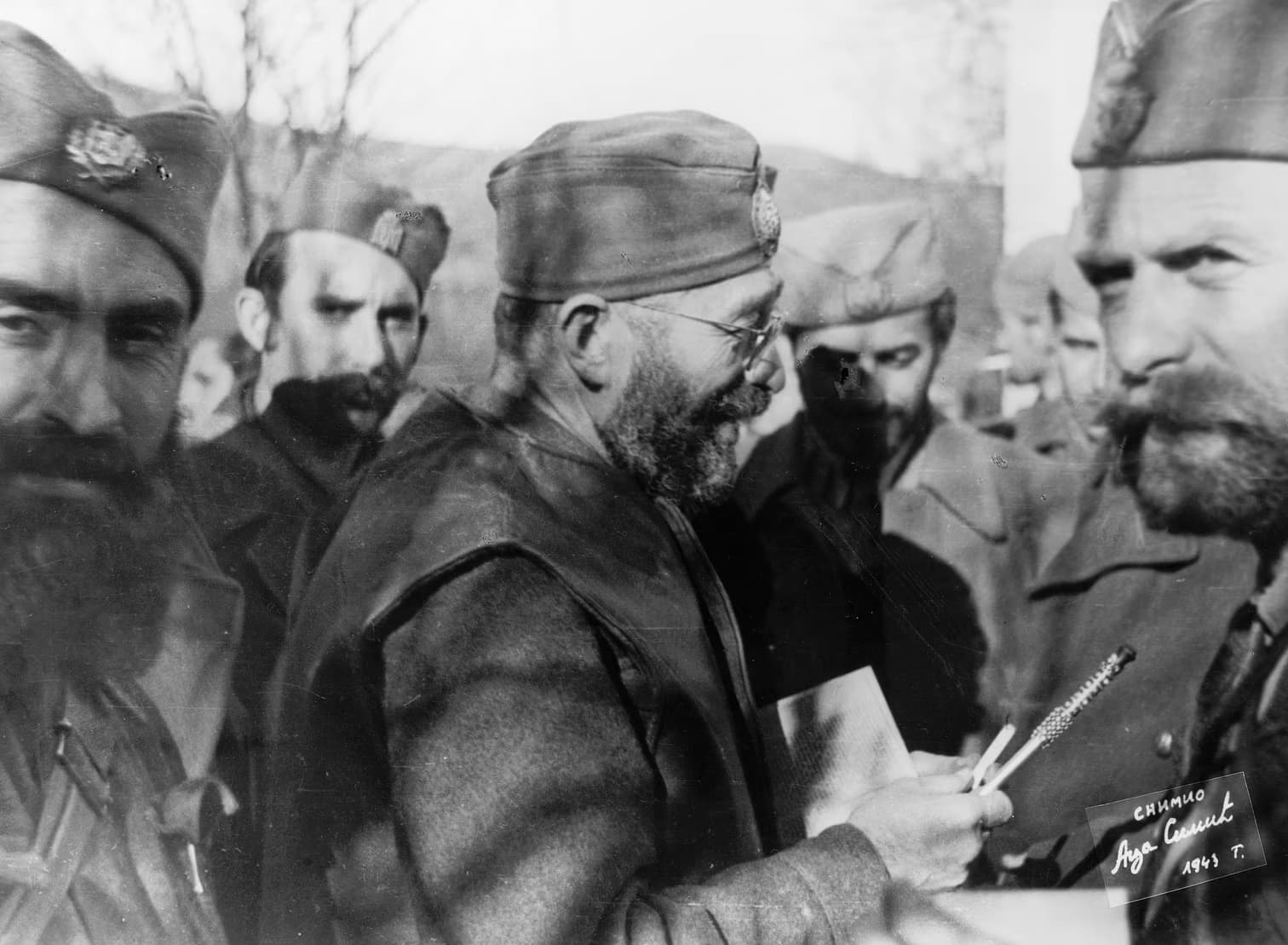
Historical photograph, Ravna Gora, 1941
About the Movement
The Movement of Serbian Chetniks Ravna Gora traces its origins to the mountainous terrain of Serbia, where General Dragoljub Mihailović led the first resistance movement against the Axis occupation of Yugoslavia during the Second World War. Founded on the principles of freedom, faith, and the defense of the Serbian people, the movement represented a continuation of centuries-old Serbian resistance traditions.
In the decades following the war, veterans of the movement who found themselves in exile worked tirelessly to preserve its memory and ideals. Under the leadership of Duke Momčilo Đujić and others, formal chapters were established across the diaspora—in the United States, Canada, Australia, and the United Kingdom—to maintain the bonds of community and ensure the historical record was not lost.
The Ravna Gora movement stands as a testament to the enduring spirit of the Serbian people—their courage in the face of occupation, their faith in justice, and their commitment to freedom.
Today, the Movement continues to serve as a guardian of this legacy. Its membership comprises descendants of original Chetniks, veterans, historians, and all those who recognize the importance of preserving this chapter of history with accuracy and dignity.
Through its chapters, publications, and community events, the Movement works to transmit this heritage to younger generations, ensuring that the sacrifices and ideals of Ravna Gora are never forgotten.
Origins
The Ravna Gora movement took its name from the plateau in western Serbia where General Mihailović and his officers gathered in the spring of 1941, refusing to accept the German occupation. From this mountain refuge, they organized the first armed resistance movement in occupied Europe, sending dispatches to the Royal Yugoslav Government in exile and coordinating with Allied forces.
The movement drew its strength from the Serbian countryside, uniting peasants, officers, clergy, and intellectuals in a common cause. Its guiding principles were rooted in Serbian Orthodox Christian tradition, the memory of the Karadjordjevic dynasty, and a fierce commitment to national independence.
The Newspaper's Role
Srbija has served not merely as a newspaper but as the living memory of our movement—a bridge between those who fought for Ravna Gora and those who carry that legacy today.
The journal Srbija (Serbia) has been published continuously since the early years of the movement's exile. Through its pages, the movement has documented historical records, shared testimony from veterans, and maintained cultural continuity across generations and continents. The newspaper represents an irreplaceable archive of primary sources and personal accounts that supplement the official historical record.
Each issue is a product of the community's collective memory—compiled by members, contributed to by historians, and distributed to subscribers across four continents. The catalog of past issues, spanning decades, constitutes one of the richest continuous documentary sources for the history of the Ravna Gora movement in exile.
The Movement Today
The Movement of Serbian Chetniks Ravne Gore today operates through its established chapters across the United States, Canada, Australia, and the United Kingdom. Each chapter maintains its own cultural and commemorative calendar while participating in the broader work of the global organization.
Contemporary membership draws largely from the descendants of original members and from individuals who share a dedication to Serbian history and cultural heritage. Annual gatherings, memorial services, and cultural events provide opportunities for the community to come together, strengthen bonds, and renew their commitment to the movement's ideals.
In recent years, the Movement has undertaken significant efforts to digitize and preserve its historical archives, making primary sources more accessible to researchers, historians, and the broader public.
Collaboration with academic institutions, Serbian Orthodox Church communities, and cultural organizations has strengthened the movement's ability to fulfill its historical and educational mission.
Through its membership programs, the Movement continues to welcome new members who wish to engage with this history and contribute to its preservation for future generations.
Preservation & Digital Future
The Movement of Serbian Chetniks Ravne Gore recognizes that the preservation of its historical record is among its most pressing responsibilities. Decades of documents, photographs, correspondence, and personal testimonies represent an irreplaceable archive that must be safeguarded for future generations.
A central pillar of this effort is the digitization of the movement's archives. By converting physical documents and photographs into digital formats, the Movement aims to ensure their long-term preservation and to make them accessible to researchers and members worldwide through a developing digital platform.
In the coming years, the Movement envisions a comprehensive online archive that will serve as a definitive resource for the history of the Ravna Gora movement—one that is both rigorously maintained and openly accessible, fulfilling the organization's commitment to historical truth and responsible stewardship of Serbian heritage.